Supreme Court Case Could Allow Lawsuits for People Injured by Private Military Contractors
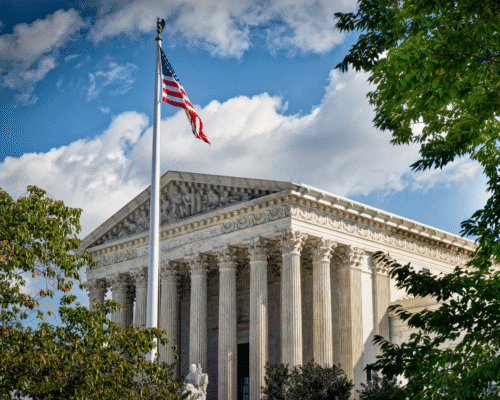
Private military contractors have played an increasingly prominent role in U.S. operations overseas, from providing security to managing infrastructure on military bases. But when these contractors act negligently and people are injured as a result, can they be held accountable? Until recently, the answer in many cases was no. However, a recent Supreme Court case, Hencely v. Fluor Corporation, could change the landscape for victims seeking justice.
The Columbus, Georgia personal injury attorneys at Butler Prather LLP believe that accountability should not end where a government contract begins. If you or someone you love has been injured due to the actions of a private military contractor, you may have the right to pursue compensation. And right now, all eyes are on Hencely, a case that could give injured individuals a clearer legal pathway to hold negligent contractors responsible.
The Hencely Case: A Tragic Incident on a Military Base
Hencely v. Fluor Corporation centers on a suicide bombing that occurred at Bagram Air Force Base in Afghanistan. The attacker, an Afghan employee on the base, managed to carry out a deadly blast, injuring U.S. service member Winston Hencely. Following the military’s investigation, it was determined that Fluor, who was a private contractor, had failed to adequately supervise the employee, violating base rules and procedures.
Hencely filed a personal injury lawsuit against Fluor, asserting that the contractor’s negligence directly contributed to the attack. However, lower courts dismissed the case, citing Boyle v. United Technologies Corp., a 1988 Supreme Court decision that extended immunity to military contractors under limited circumstances.
Boyle v. United Technologies: A Narrow Precedent
The issue with using Boyle as a blanket shield for contractors like Fluor lies in the details. In Boyle, the contractor had designed military equipment exactly as the government instructed. The Court ruled that it wouldn’t make sense to hold the contractor liable under state law when it was following federal orders.
But that is not what happened in Hencely. In this case, Fluor allegedly violated its own contract terms and military base regulations. No one ordered them to ignore safety protocols. As Justice Elena Kagan stated during oral arguments, “the contractor is liable as long as the military didn’t specifically approve or direct the conduct.”
This distinction is at the heart of the debate: Is immunity still valid when the contractor’s conduct contradicts military expectations?
Justices Are Skeptical About Granting Contractors Immunity
During oral arguments earlier this week, most justices seemed skeptical of granting contractors absolute immunity for actions taken in war zones, particularly when those actions violate contracts or military rules. Justice Sonia Sotomayor pointed out that immunity should only apply “if the state law conflicts with military orders in some way. … And so, if there’s no conflict, there’s no interest to protect.”
Justice Neil Gorsuch echoed this idea, highlighting that existing government regulations already caution contractors that immunity doesn’t apply unless the military exercises specific control over their conduct.
Justice Amy Coney Barrett added that even if state law is preempted by federal interests, that doesn’t automatically mean there is no liability. The Federal Tort Claims Act, for example, doesn’t extend combat-related immunity to independent contractors.
What This Means for Injured Victims
If the Court rules in favor of Hencely, it will set a powerful precedent: Private military contractors who act outside their contracts or fail to follow military protocol could be held liable in personal injury lawsuits. That opens the door for injured individuals, including service members and civilians, to pursue justice through the civil court system.
It’s a long overdue shift. Military contractors often operate with limited oversight in high-risk environments. If they know they can be held accountable for negligence, they’ll have greater incentive to prioritize safety, not just efficiency or profit.
What You Can Do If You’ve Been Injured by a Military Contractor
If you were harmed by a private contractor’s actions, either in a combat zone or stateside, you should speak with an experienced personal injury attorney right away. These cases involve a complex intersection of federal law, military operations, and private contracts. At Butler Prather LLP, we have a long history of handling high-stakes injury cases and standing up to powerful corporations. We are prepared to investigate your claim thoroughly and fight for the compensation you deserve.
Your case could involve:
- Contractor negligence or failure to follow safety protocols
- Misconduct by private security forces
- Vehicle or equipment accidents caused by contractor error
- Improper background checks or supervision of employees
If Hencely is decided in favor of the plaintiff, it may provide a stronger legal framework to pursue these claims, even when they happen abroad.
Speak With a Trusted Personal Injury Attorney in Columbus, GA
The Supreme Court’s ruling in Hencely v. Fluor Corporation could change the law. But you don’t have to wait to get answers about your legal rights. If you’ve been injured due to a private military contractor’s misconduct, we’re here to help.
Call Butler Prather LLP at (706) 322-1990 for a free consultation. Our Georgia personal injury attorneys are committed to holding wrongdoers accountable – no matter how powerful they are. Let us review your case and explain your legal options in a straightforward and compassionate way.